


-
 fast draining
-
robust
-
simple handling

Delivery time: 1-2 working days
Couldn't load pickup availability
Request an Individual Solution
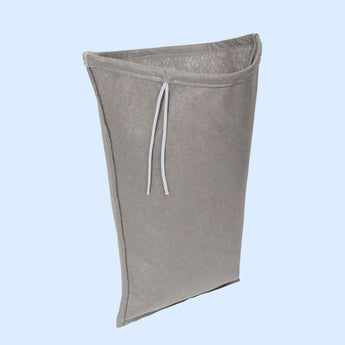
Microplastic Filter Bag for Road and Yard Drains (70 µm) – A Decentralised Solution for Waterway Protection
Effective Retention of Microplastics, PAHs and Heavy Metals
Requirements for decentralised stormwater treatment are steadily increasing. Whether microplastics, tyre wear, fine particulates, PAH-laden particles or heavy metals, pollutants need to be captured right at the source.
The WINKLER microplastic filter bag (70 µm) for road and yard drains offers a proven, immediately retrofittable solution. It sustainably improves the quality of discharged stormwater and helps municipalities and industry meet regulatory requirements.
You'll find further solutions in our Filtration for Transport & Logistics – road drainage & rainwater and Filtration for Energy & the Environment – rainwater & microplastic filtration ranges.
Compliant With DWA-A 102 and BWK A 3
Technical standards such as DWA-A 102 and BWK A 3 (German guidelines) set high requirements for retaining the finest fractions (AFS63). While complex technical plant often comes with high investment costs, our 70 µm fine filter bag offers a cost-effective, technically straightforward solution.
Installation takes place directly in the catch basket – without extensive modifications or infrastructure work.
Two-Layer System for Maximum Operational Reliability
The filter bag is made from two-layer polypropylene needle felt. This construction combines high water permeability with reliable retention of the finest particles down to 70 µm. The system is optimised for heavy rainfall events and withstands abrasive stress from sand and tyre wear.
Your Benefits at a Glance
- Highly efficient: Retains the finest particles (nominal 70 µm) with high flow performance.
- Supports compliance: Helps meet DWA-A 102 and BWK A 3 requirements.
- Retrofittable: Fitted without shaft modifications or costly technology.
- Cost-efficient: A cost-effective way to improve AFS63 retention.
- Flexible fit: Suits different catch basket sizes.
Technical Details
| Material | Polypropylene needle felt, two-layer |
| Length | 0.49 m – 0.84 m |
| Width (opening) | 0.64 – 0.645 m |
| Weight | approx. 0.20 kg |
| Micron rating | 70 µm (nominal) |
| Water permeability | 120 l s-1 m-2 at 100 mm water column |
| Pack size | Each |
| Delivery time | 1–2 working days |
Advice for Municipalities, Public Works Yards and Industry
Want to make your stormwater treatment compliant and cost-effective? Use our filtration product advice service. We'll help you select and integrate the right filter system for your drainage planning.
FAQ – Microplastic Filter Bag for Road and Yard Drains
Common Questions About Microplastic Filtration in Road Drains and Catch Baskets
The microplastic filter bag for road and yard drains (70 µm) was developed specifically for decentralised stormwater treatment. It enables effective filtration of microplastics, tyre wear and fine particulates directly in the catch basket, with no extensive modifications to existing drainage systems.
Which pollutants can the microplastic filter bag retain?
This significantly improves the quality of discharged stormwater, particularly from roads and yard areas.
Where is a microplastic filter bag used?
Typical application areas include municipal roads, commercial yards, industrial areas or car parks.
Does the filter bag help with DWA-A 102 compliance?
By retaining fine solids, it particularly reduces the proportion of filterable substances, which plays an important role in stormwater treatment.
How is the microplastic filter bag installed?
Retrofitting requires no structural changes, so existing systems can be upgraded quickly.
How often does a microplastic filter bag need changing?
Regular checks as part of standard shaft maintenance are usually sufficient.


